
Why Do I Need a Website for My Business in 2026? The Essential Guide
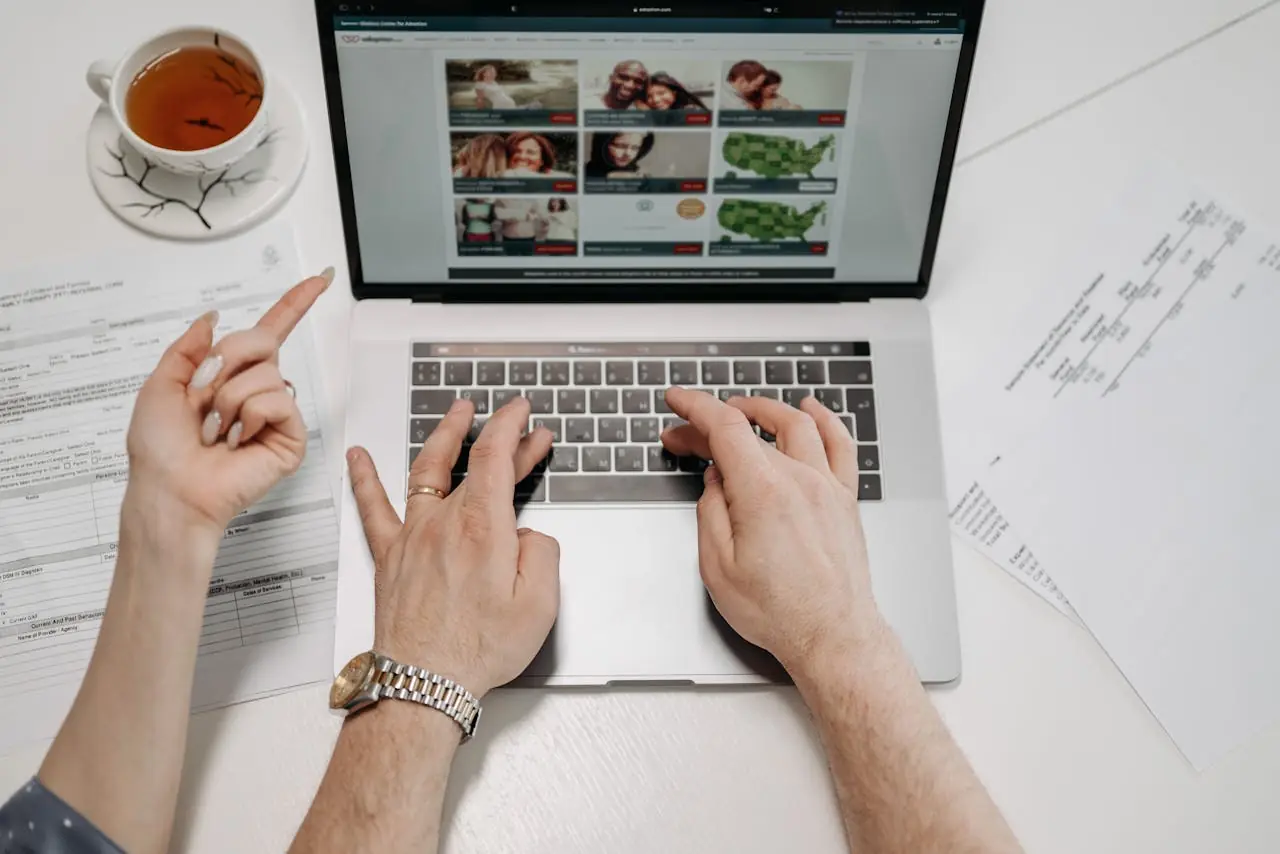
If you're asking yourself "why do I need a website for my business in 2026?", you're not alone. Despite living in an increasingly digital world, many small business owners still question whether investing in a professional website is truly necessary. Perhaps you're relying on social media, word-of-mouth referrals, or your physical location to attract customers. Whilst these channels certainly have their place, the truth is that operating without a website in 2026 puts your business at a significant disadvantage.
In this comprehensive guide, we'll explore the compelling reasons why every UK business needs a professional website, backed by current statistics and real-world examples that demonstrate the tangible benefits you're missing out on.
Your Customers Expect You to Have a Website
Consumer behaviour has fundamentally shifted. Recent research shows that 97% of consumers search online when looking for local businesses and services. If your business doesn't appear in those search results with a professional website, you're essentially invisible to the vast majority of potential customers.
Consider this scenario: a potential customer hears about your business through a recommendation. What's the first thing they'll do? They'll search for your business name online. If they can't find a website, or only find sparse information on social media, it immediately raises questions about your legitimacy and professionalism.
In 2026, a website isn't just a nice-to-have—it's a fundamental expectation. Think of it as the digital equivalent of having a sign above your shop door. Without it, customers simply move on to your competitors who do have an online presence.
You're Open 24/7, Even When You're Not
One of the most powerful advantages of having a website is that it works for your business around the clock. Whilst you're sleeping, spending time with family, or focused on other aspects of running your business, your website continues to inform, attract, and convert potential customers.
This is particularly valuable for small businesses with limited staff. Your website can answer frequently asked questions, showcase your products or services, provide pricing information, and even take bookings or orders—all without requiring your direct involvement every time.
A bakery in Somerset, for example, might receive enquiries about custom cake orders at 10pm on a Sunday evening. With a website featuring a contact form, gallery of previous work, and clear information about the ordering process, that potential customer can get the information they need immediately, rather than waiting until Monday morning and possibly forgetting or choosing a competitor instead.
Your Website is Your Digital Sales Representative
Think about the cost of hiring a full-time salesperson. Now consider that a professional website serves as a tireless sales representative that never takes a day off, never needs training, and consistently presents your business in the best possible light.
Your website can:
- Showcase your products or services with high-quality images and detailed descriptions
- Highlight customer testimonials and case studies that build trust
- Explain your unique selling points and what sets you apart from competitors
- Guide visitors through the customer journey from initial interest to taking action
- Capture leads through contact forms, email sign-ups, or downloadable resources
For many small businesses, particularly those in service industries, the website becomes the most effective member of the sales team, generating qualified leads and enquiries whilst you focus on delivering excellent service to existing customers.
Local Search Dominance Requires a Website
If you serve customers in a specific geographic area—whether that's Yeovil, Somerset, Dorset, or anywhere else in the UK—local search visibility is crucial for your success. When someone searches for "plumber near me" or "accountant in Yeovil", Google prioritises businesses with professional websites that are properly optimised for local search.
Without a website, you're excluded from these local search results entirely. You can't appear in the map pack, you can't benefit from local SEO strategies, and you're missing out on the customers who are actively searching for exactly what you offer in exactly the location where you operate.
Recent data shows that 76% of people who search for something nearby on their smartphone visit a related business within 24 hours, and 28% of those searches result in a purchase. If your business isn't showing up in those searches because you lack a website, you're leaving significant revenue on the table.
Social Media Alone Isn't Enough
Many business owners believe they can rely solely on social media platforms like Facebook, Instagram, or LinkedIn. Whilst these platforms are valuable marketing tools, they're no substitute for a professional website.
Here's why:
You don't own your social media presence. Platforms can change their algorithms, restrict your reach, suspend your account, or even shut down entirely. Your website, by contrast, is an asset you own and control completely.
Limited functionality. Social media profiles offer basic information, but they can't provide the depth of content, functionality, or customisation that a proper website can deliver. You can't integrate booking systems, create detailed service pages, or implement e-commerce functionality effectively on social media alone.
Professional perception. A business that only exists on social media is often perceived as less established and professional than one with a dedicated website. For higher-value services or B2B transactions, this perception gap can be the difference between winning and losing business.
Search visibility. Whilst social media profiles can appear in search results, they're rarely the primary result for business-related searches. A well-optimised website will outperform social media profiles in organic search results.
Think of social media as a complement to your website, not a replacement. Use social platforms to engage with customers and drive traffic to your website, where you have full control over the experience and can implement more sophisticated conversion strategies.
Credibility and Trust in the Digital Age
Trust is the foundation of every business relationship. In 2026, your website plays a crucial role in establishing that trust before a customer ever contacts you or walks through your door.
A study by Stanford University found that 75% of users admit to making judgements about a company's credibility based on their website design. A professional, well-designed website signals that you're a legitimate, established business that takes itself seriously. Conversely, a poor website—or no website at all—raises immediate red flags.
Your website allows you to demonstrate credibility through:
- Professional design that reflects your brand identity
- Detailed information about your team, history, and values
- Case studies and testimonials from satisfied customers
- Industry accreditations, certifications, or awards
- Regular blog content that demonstrates your expertise
- Clear contact information including physical address and phone number
For many customers, particularly those making significant purchasing decisions, this credibility check happens entirely online before they ever make contact. Without a website, you don't get the opportunity to make your case.
Cost-Effective Marketing with Measurable Results
When you consider why do I need a website for my business in 2026, the marketing value alone justifies the investment. Traditional advertising—whether print, radio, or even local sponsorships—requires ongoing expenditure with limited ability to track effectiveness.
A website, combined with digital marketing strategies, offers remarkable return on investment:
Lower customer acquisition costs. Once your website is established and optimised for search engines, it generates organic traffic without ongoing advertising spend. Compare this to paying for every click on a Google Ad or every print advertisement.
Precise targeting. Digital marketing allows you to target specific demographics, locations, and even people who have previously visited your website. This precision means your marketing budget goes further.
Measurable performance. Modern analytics tools show exactly how people find your website, what they do when they arrive, and which marketing efforts generate actual customers. This data-driven approach allows you to continuously improve your marketing effectiveness.
Scalable investment. You can start with a simple, professional website and expand its functionality as your business grows, adding e-commerce capabilities, customer portals, or advanced features when the time is right.
Competitive Advantage in Your Market
Here's an uncomfortable truth: if you're asking why you need a website in 2026, your competitors almost certainly aren't asking the same question—they already have one. In most industries, having a professional website is now table stakes for competing effectively.
However, this also represents an opportunity. If your competitors have outdated, poorly designed websites whilst you invest in a modern, user-friendly site, you gain an immediate competitive advantage. Customers comparing businesses in your industry will naturally gravitate toward the one that appears more professional, trustworthy, and easy to work with.
In sectors where some businesses still lack websites entirely, the advantage is even more pronounced. You can capture market share simply by being visible and accessible online when your competitors aren't.
Supporting Your Customer Journey
Modern customers rarely make purchasing decisions in a single interaction. They research, compare options, seek recommendations, and often return multiple times before committing to a purchase, particularly for significant investments.
Your website supports every stage of this journey:
Awareness stage: Blog content and informational resources help potential customers understand their problems and possible solutions, positioning your business as a helpful expert rather than a pushy salesperson.
Consideration stage: Detailed service pages, case studies, and comparison information help customers evaluate whether your offering meets their needs.
Decision stage: Clear pricing, testimonials, guarantees, and easy contact options help convert interested prospects into customers.
Post-purchase: FAQ sections, resource libraries, and customer portals support existing customers, reducing support burden and increasing satisfaction.
Without a website, you can only engage customers at the point they're ready to make contact, missing valuable opportunities to influence their decision-making process earlier in the journey.
The True Cost of Not Having a Website
Let's consider the mathematics of operating without a website. If even 10% of your potential customers search for your type of business online and choose a competitor because you're not visible, what does that represent in lost revenue?
For a small business with £100,000 in annual revenue, that 10% represents £10,000 in lost sales each year. Over five years, that's £50,000—significantly more than the cost of developing and maintaining a professional website during the same period.
The calculation becomes even more stark when you consider that 97% of consumers search online for local businesses. Even if your offline presence, referrals, and existing customers sustain your business, you're operating at a fraction of your potential without capturing online demand.
Taking the Next Step
So, why do I need a website for my business in 2026? The question isn't really whether you need one—the overwhelming evidence makes it clear that you do. The real question is what kind of website will best serve your business goals and customers.
A professional website doesn't need to be complicated or expensive to be effective. The key is ensuring it's well-designed, mobile-friendly, properly optimised for search engines, and genuinely useful to your target customers.
At Saunders Simmons, we specialise in creating professional websites for businesses across Somerset, Dorset, and throughout the UK. We understand that every business is unique, and we work closely with you to create a website that not only looks professional but actively contributes to your business growth.
Whether you're starting from scratch or looking to replace an outdated website that no longer serves your needs, we're here to help. Get in touch today to discuss how a professional website can transform your business's online presence and open up new opportunities for growth in 2026 and beyond.
The digital world isn't waiting, and neither are your customers. Whilst you're deciding whether you need a website, they're already online, searching for businesses like yours. Make sure they find you.